

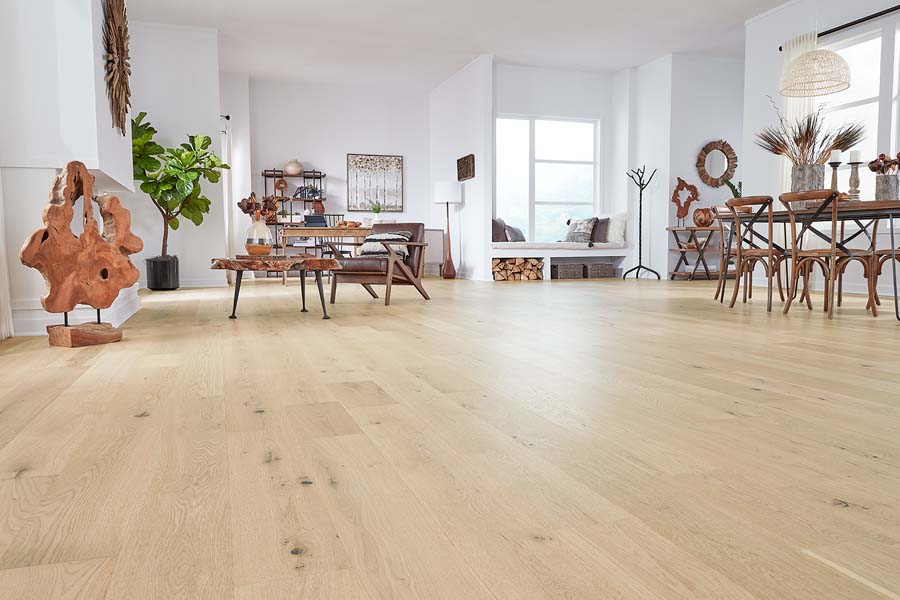
Hardwood flooring is more than just a surface. It sets the tone for how your home looks and feels every day. When you walk into a space with wide plank hardwood, the room feels open, calm, and expansive. When you step into a room with narrow plank hardwood, you notice detail, texture, and a sense of tradition. Both options use the same natural material, but the visual impact is completely different.
If you are deciding between wide plank and narrow plank hardwood floors, the choice involves more than appearance. It also affects installation, performance, cost, and how your flooring responds to the Lowcountry climate. At our wood flooring stores in Goose Creek, SC, and Mount Pleasant, SC, we have over 20 years of experience helping homeowners in the Lowcountry and surrounding areas make the right decision for their space. Our goal is to help you understand the differences clearly so you can choose with confidence.
What is the difference between wide plank and narrow plank hardwood floors?
The primary difference between wide plank and narrow plank hardwood flooring is the width of each board, but the impact goes far beyond measurements.
Narrow planks typically range from 2 inches to 3 inches wide
Wide planks generally start around 5 inches and can extend up to 10 inches or more
This difference in width changes how the floor looks once installed. Narrow planks create more seams and lines across the floor, which adds movement and visual texture. Wide planks reduce the number of seams, which creates a smoother and more continuous appearance.
The result is a noticeable difference in how the entire room feels. Narrow planks bring detail and pattern, while wide planks create a more open and streamlined look.
Which hardwood plank size makes your space look bigger?
If your goal is to make a room feel larger and more open, wide plank wood flooring is typically the better choice. Because there are fewer seams, your eye can move across the floor without interruption. This creates a sense of flow that helps the space feel more expansive.
Wide planks are especially effective in:
Open concept living areas
Smaller homes or coastal properties in the Lowcountry
Rooms with plenty of natural light
Narrow planks, on the other hand, introduce more lines and visual breaks. This can make a space feel more detailed and structured, but it may also make the room feel slightly smaller.
Neither option is better in every situation. The right choice depends on whether you want your space to feel open and modern or detailed and traditional.
Are wide planks more modern than narrow planks?
Wide plank hardwood flooring is commonly associated with modern and contemporary design styles. It is often used in homes that feature clean lines, open layouts, and a more minimalist aesthetic.
Wide planks are frequently found in:
Modern farmhouse designs
Coastal homes throughout the Lowcountry
Contemporary and transitional interiors
Narrow planks are more closely tied to traditional design. They are often used in older homes or spaces that aim to preserve a classic look.
Narrow planks are well-suited for:
Historic homes in Charleston, SC, and the surrounding areas
Colonial or traditional interiors
Spaces that emphasize detail and craftsmanship
The decision ultimately comes down to your personal style and the overall character you want your home to reflect.
How does humidity in the Lowcountry affect plank width?
Humidity plays a major role in how hardwood flooring performs, especially in coastal regions like the Lowcountry. Wood naturally expands and contracts as moisture levels change, and plank width influences how noticeable that movement can be.
Wide planks
Tend to expand and contract more visibly
Require proper acclimation before installation
Perform best with expert installation and often engineered construction
Narrow planks
Show less noticeable movement
Are generally more forgiving in humid conditions
Can be a practical option for certain environments
This does not mean wide planks should be avoided. It simply means that proper hardwood floor installation and preparation are essential. At Flooring Factory, we understand the specific challenges of the Lowcountry climate. Our team ensures that every hardwood floor is installed with the right techniques to maintain long-term performance.
Which wood flooring option is easier to maintain over time?
Both wide and narrow plank hardwood flooring are relatively easy to maintain, but they wear differently over time.
Wide planks
Have fewer seams, which makes cleaning more straightforward
May show scratches more clearly due to larger board surfaces
Do not trap as much dust and debris between boards
Narrow planks
Have more seams, which may require slightly more attention when cleaning
Help conceal scratches and wear because of the increased visual variation
Can mask everyday use more effectively
If your home has heavy foot traffic, pets, or children, narrow planks may help hide wear over time. However, wide planks remain a durable and attractive option when properly finished and maintained.
Are wide planks more expensive than narrow planks?
In most cases, wide plank hardwood flooring comes at a higher price point than narrow plank options. This is due to several factors related to materials and installation.
Wide planks
Require larger sections of high-quality wood
Involve a more complex manufacturing process
Often require more preparation during installation
Narrow planks
Use smaller cuts of wood, which can reduce material costs
Are generally easier to install
Can help keep overall project costs more manageable
While wide planks may involve a greater investment, many homeowners find the visual impact and modern appeal to be worth the additional cost.
Which hardwood plank size works best for different rooms?
Different areas of your home may benefit from different plank sizes depending on layout and design goals.
Wide planks are ideal for:
Living rooms
Kitchens
Open floor plans
Primary bedrooms
Narrow planks are well-suited for:
Hallways
Smaller rooms
Traditional dining spaces
Historic renovations
In many homes throughout the Lowcountry, a combination of both styles can create balance. For example, wide planks can be used in main living areas, while narrow planks add detail in smaller or more traditional spaces.
Should you choose solid or engineered hardwood floors for wide or narrow planks?
The type of hardwood flooring you choose is just as important as the plank size, especially in a humid climate.
Wide planks
Often perform better as engineered hardwood flooring
Provide greater stability in areas with moisture fluctuations
Reduce the risk of expansion and contraction issues
Narrow planks
Can work well with solid hardwood construction
Offer a more traditional flooring option
Allow for multiple refinishing opportunities over time
At Flooring Factory, we guide each customer through these choices to ensure the final result is both beautiful and durable.
How do you decide which hardwood plank is right for your home?
The best way to decide is to think about both style and performance.
Choose wide plank hardwood floors if you want:
A modern and open appearance
Fewer seams and a more continuous look
A design that feels elevated and contemporary
Choose narrow plank hardwood floors if you want:
A classic and traditional aesthetic
More texture and visual detail
A surface that can help conceal wear over time
If you are still unsure, seeing the options in person can make a significant difference.
Contact our wood flooring store today
Selecting between wide plank and narrow plank hardwood flooring is an important decision, but you do not have to make it alone. Our team is here to help you explore your options, understand the differences, and choose a solution that fits your home and lifestyle.
Get in touch with Flooring Factory today! We offer a wide selection of hardwood floors and more.


